 Board games
Place a stone each turn and make a straight line of five.
Getting a board
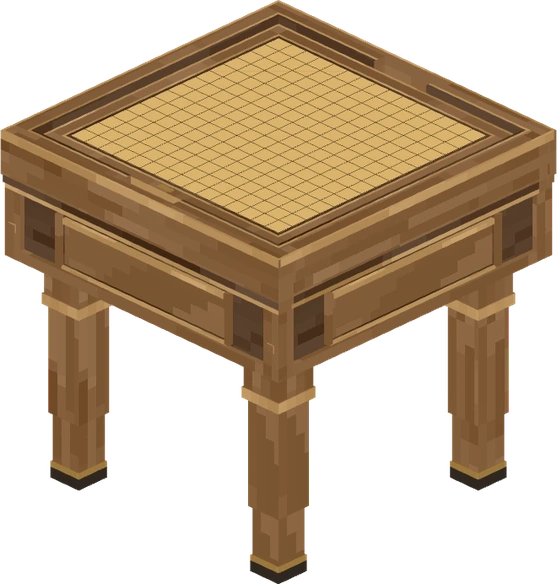
Section titled “Getting a board”Craft a Gomoku Board and fit it into a Small Game Table. Place matching Game Chairs facing the table, then take a seat.


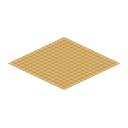
- 1 ×Black dye
- 7 ×Any planks
- 1 ×Orange wool
How to play
Section titled “How to play”Open the fitted board to make your moves. How to play in the side tray gives you the same lessons with illustrations inside the game.
One stone each turn
Section titled “One stone each turn”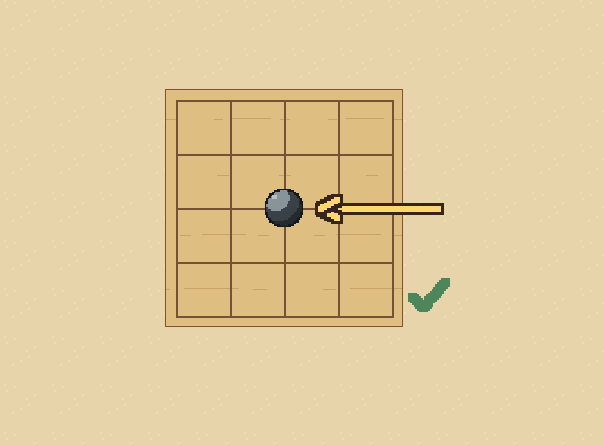
Put one stone on an empty crossing. Black starts; then alternate turns.
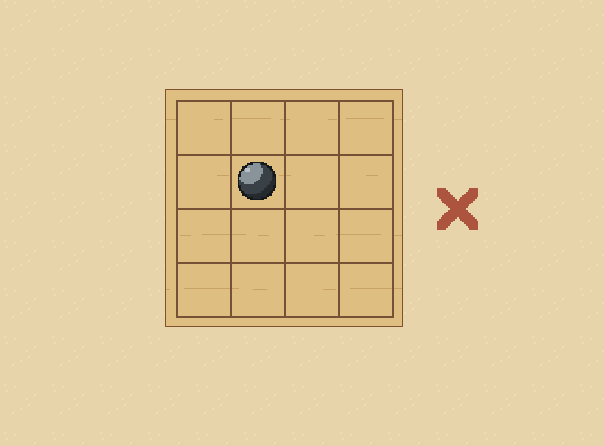
Stones sit where the lines meet, not in the spaces between them.
Make five
Section titled “Make five”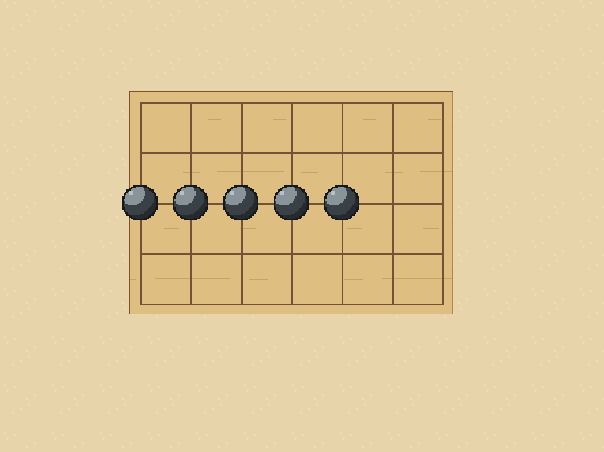
Five connected stones in a row win.
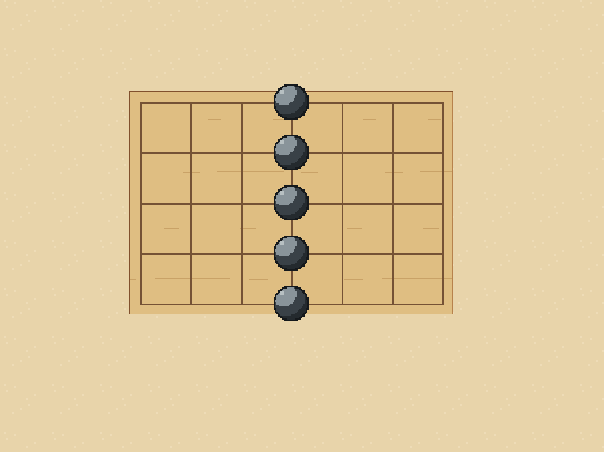
A vertical line of five wins too.
Diagonal lines count
Section titled “Diagonal lines count”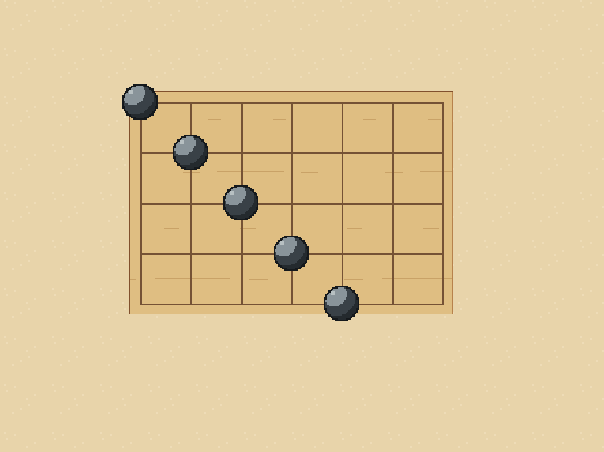
Five diagonally connected stones also win.
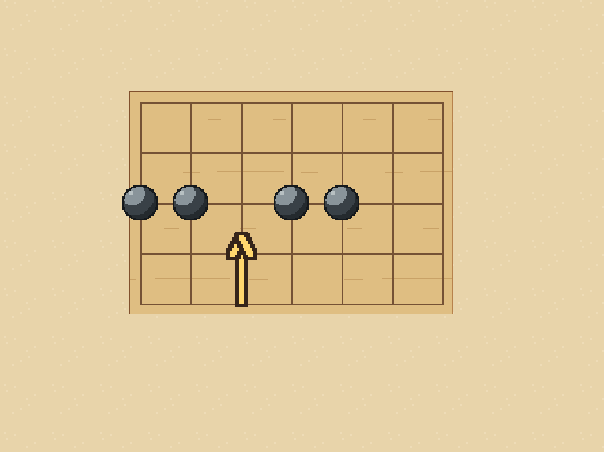
A space breaks the line. Fill it to connect your stones.
Watch the other player
Section titled “Watch the other player”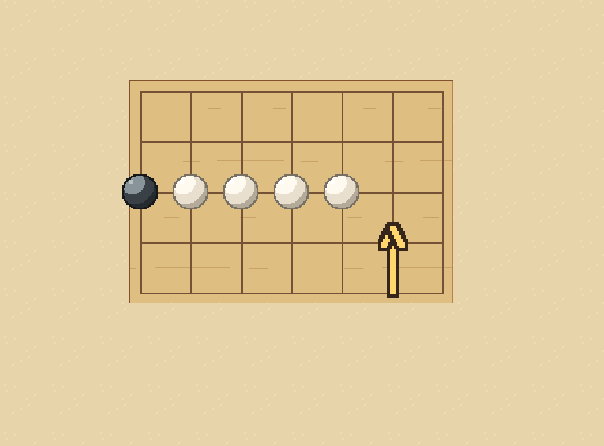
White has four. Black can block the empty end on this turn.
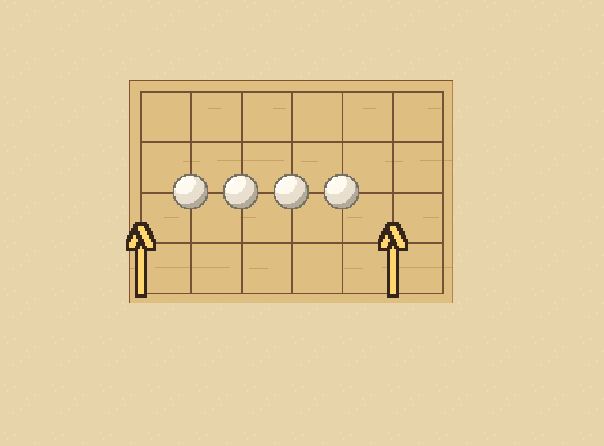
An open four threatens both ends. Blocking one leaves the other winning move.
Rules in more detail
Section titled “Rules in more detail”Our freestyle rules
Section titled “Our freestyle rules”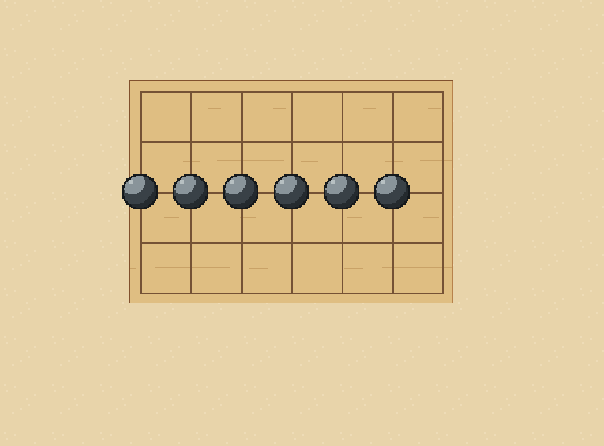
A line of six or more also wins here. There are no forbidden opening moves.
If every crossing is filled without a winning line, the game is a draw.
Freestyle lines and overlines
Section titled “Freestyle lines and overlines”This is a fifteen-by-fifteen freestyle board. Five or more consecutive stones win, so a line of six also wins. Renju restrictions on double-threes, double-fours and overlines are not used here. A full board without a winning line is a draw. Evaluate both diagonals as well as rows and columns when comparing threats.
Keep playing
Section titled “Keep playing”Use Rematch after the result to play again. To pause an unfinished match, the table owner can remove and keep its board.
See seats and solo play for multiplayer and Play alone, or item stakes if you want to agree on a pot.